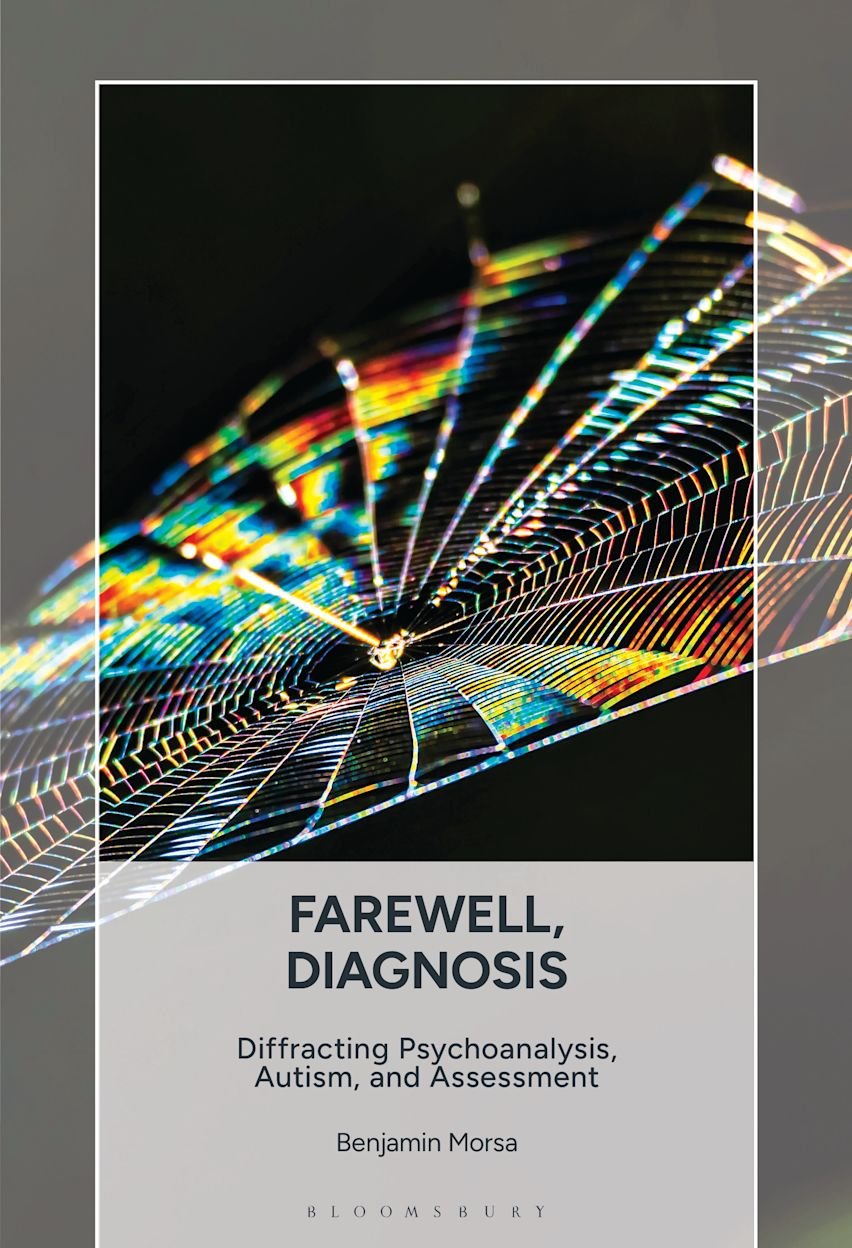
Farewell, Diagnosis
Not a rebuke of diagnosis, but a reckoning with it. A psychoanalytic inquiry into what diagnosis does, what it forecloses, and what becomes possible when we suspend the need for diagnostic certainty.
Diffracting Psychoanalysis, Autism, and Assessment
What comes after diagnosis?
Farewell Diagnosis examines the material urgencies of autism diagnosis alongside the conceptual and clinical problems that diagnosis can produce. Taking psychoanalysis as both a method and an object of critique, Ben Morsa asks what happens when a discipline defined by curiosity, uncertainty, and attention to psychic life encounters autism.
Drawing on psychoanalysis, feminist science studies, and lived experience, the book approaches autism and assessment not as problems to be solved but as entangled processes to be lived with. It engages the tensions between pathologizing logics and affirming frameworks, between open-ended listening and institutional constraint, and asks what comes after diagnosis, not only in systems of care but in the patient’s internal world.
In a market polarized between pathologization and affirmation, the book advocates for curiosity in the clinical process, particularly about the patient’s inner world. It suspends knowing and defining in favor of dynamism, surprise, and play, tracking the contradictions that emerge when we attend to the sticky, dynamic, relational web of meaning.
Farewell Diagnosis is not a rebuke of diagnosis, whether self or clinical. It respects diagnosis as impactful, even a floor for someone to find their footing. But it also explores how diagnosis can become a ceiling, and argues that breaking through it requires saying farewell to diagnosis as the full story, the complete solution, for any given life.